
Situation—Why big wildfires happen
Sorrento Fire, June 8, 2026
First, a wildfire is not a wildfire when homes start to burn
An important distinction for this discussion is that when wildfire enters the built environment and burns structures, it is not longer really a wildfire. Most experts to date are calling it urban fire. An urban fire is not what many people think it is; a wall of flame emerging from the trees and sweeping across a community. That does happen, but there is something else. In all modern wildfires that have caused major damage structures started burning well in front of the fire face, in a few cases over a mile in front. How is this possible?
|
|
In a word—
EMBERS
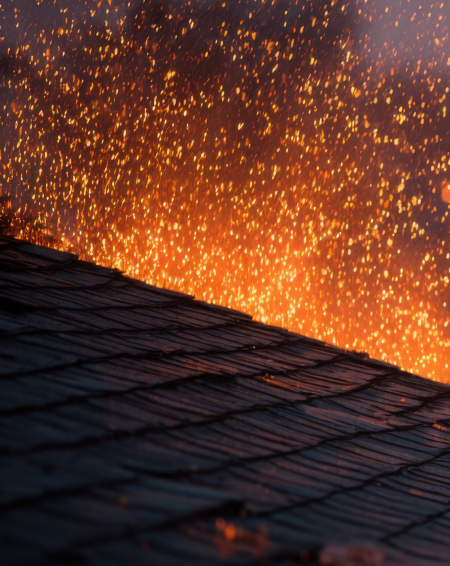
In today’s urban conflagrations, estimates are that 60-80% of homes burned were ignited by embers. These embers can run to the size of a golf ball, they are very hot, and the ember flux (density) can be very high.
Embers are generated by burning dry foliage in the Wildland Urban Interface (WUI) until fire breaches the built environment. A plant burns for a few minutes, a house can burn for hours and release millions of large, hot embers
How can embers ignite a house? The campfire model
Before every home had a gas log and every backpack a butane lighter, camp and hearth fires were built old-school; starting with tinder; dry twigs, leaves and other light, dry combustible materials heaped together and ignited with a wooden match. When that was going well, small sticks called kindling were added in a layer until well ignited, then the fuel wood was carefully laid on, and lots of oxygen was provided.
Embers act as tinder in the AI-generated example below. The kindling is dry combustible material accumulated at the base of the house, such as dried bushes, chipped wood mulch, stacks of lumber or in some cases the house’s cladding attached all the way to the ground. When this fire has enough fuel and oxygen to develop radiant heat or substantial flame length, the eaves ignite, then in most cases the soffit, and the fire enters the attic.
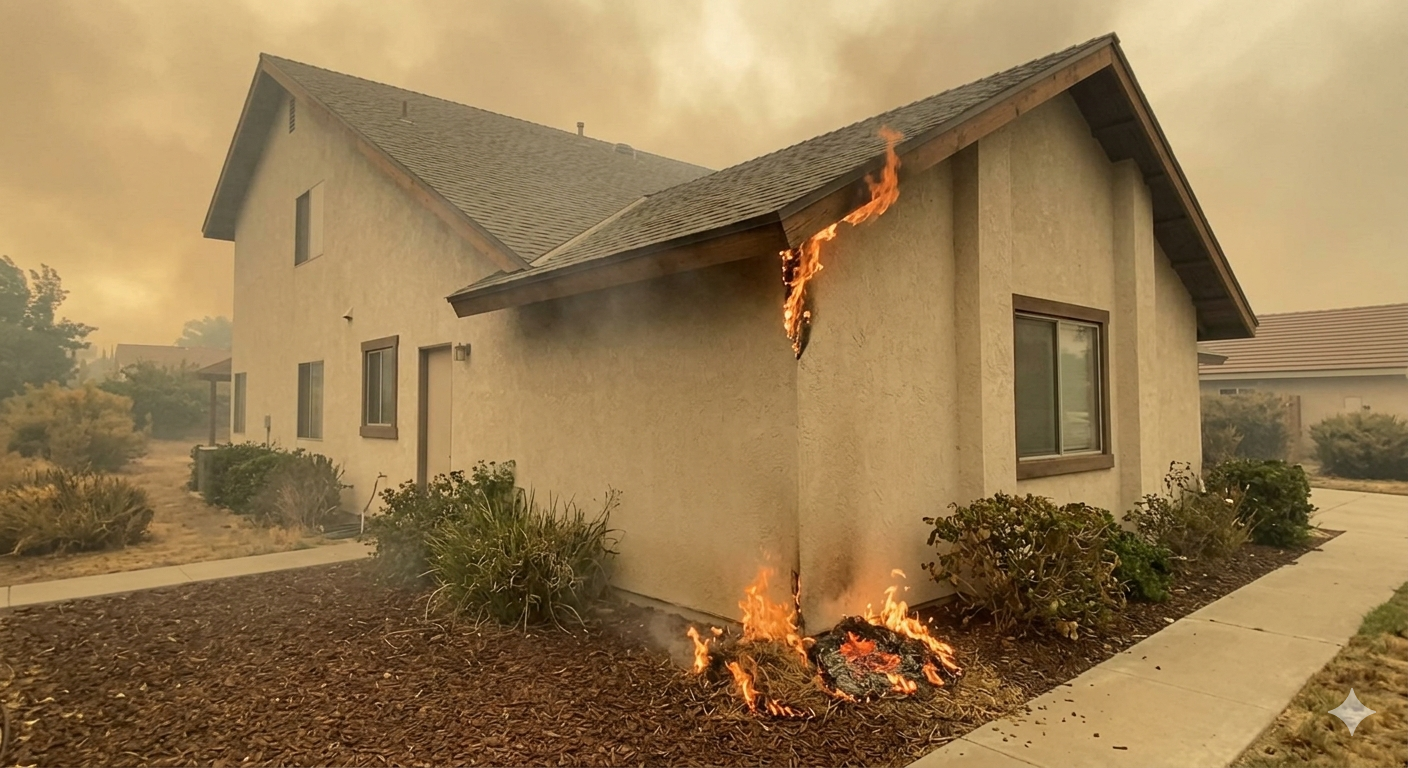
There are two other potential entry points here; the bushes under the windows can ignite, flame up and implode the windows, sucking fire into the interior. Also, on the gable wall on the left there is a vent at the top. If the vent is screened with ¼ inch mesh, as most of the homes in Mira Mesa are, then embers will pass freely into the attic in sufficient quantities to ignite. There will be more on vents later.
When embers ignite a house, then what?
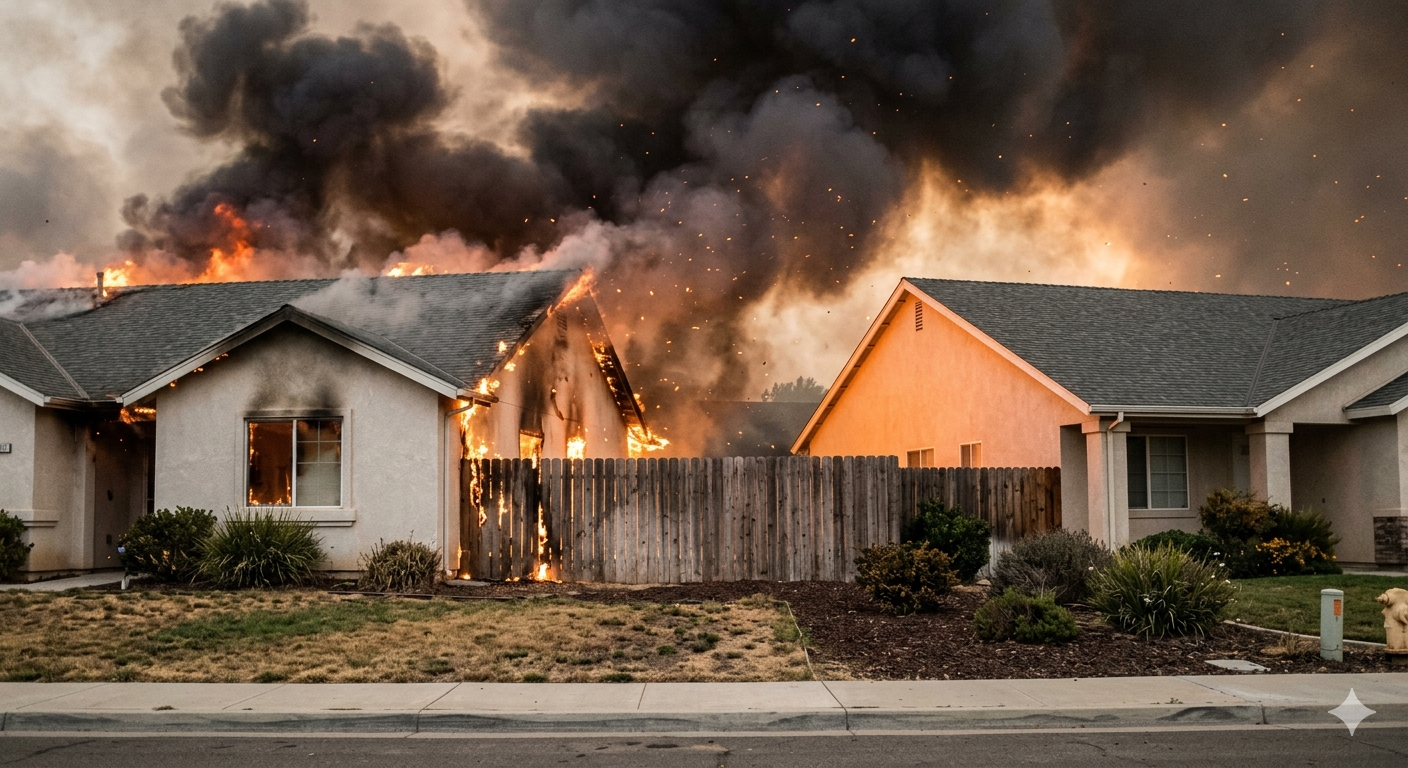
As mentioned before, a house can burn very hot with enough wind pressure. If the Structure Separation Distance (SSD) is small enough under the wind circumstances, the house downwind will ignite as well. Preventing this passively without firefighter intervention is a topic that will be discussed in detail elsewhere (Home hardening).
Even with adequate SSD, connecting fuels can play a roll in sequential ignitions. Connecting fuel can be a fence as shown in the example, or a hedge, a line of cypresses or other tall slender trees, or sometimes a shed or RV. When the connecting fuel comes under the eaves on the next house, an ignition can occur similar to the previous ember ignition, which subsequently penetrates the soffit, and fire enters the attic.
How do you stop one of these ember-initiated fires?
The best way is to not let it get started. Homes must be made less combustible overall, and ember resistance built into homes and landscapes.
This is the first step in building Defensible Space; the process of interrupting the fuel chain that can foster ember spread that will develop into an urban conflagration.