
Our home Mira Mesa
Twenty three years ago,
the Cedar Fire burned over 273,000 acres in San Diego County. We remember it here in Mira Mesa because it tore through part of Scripps Ranch, hopped the 15 and headed Southwest, bypassing our community. We were told to stay in place, but thousands of county residents were evacuated in front of the fire. In 2007, The Witch/Guejito Fire burned across the county further North of us.
Mira Mesa is one of San Diego’s largest communities, with a population estimated at 80,000, in about 25,000 households. Future expansion, notably in Carroll Canyon, may bring the population over 110,000.
Most of our residents don’t think much about wild fire. We don’t have the eucalyptus of Scripps Ranch, or the pines of Julian. For many years Local, County and State officials have enjoined us to conserve water in all ways, but especially in our landscapes. Water-hungry lawns are slowly disappearing. So are many of our deciduous trees.
Of course we are all aware of our canyons. They provide an endless stream of visitors; birds, coyotes, skunks, opossums, the occasional racoon and a variety of reptiles. This thriving ecosystem exists all around us in four major canyons (Penasquitos, Lopez, Caroll, Rattlesnake) and several minor ones.
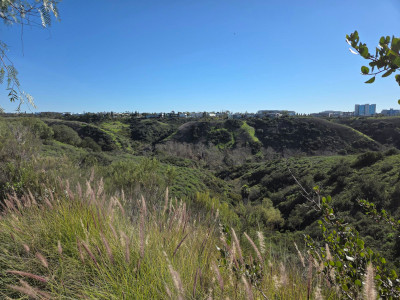
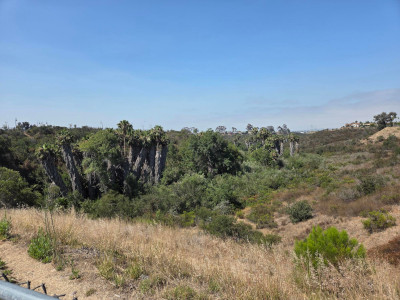
It is because of our proximity to these canyons that much of Mira Mesa has been classified by the State of California and the City of San Diego as Very High Fire Hazard Severity Zone.
The foliage is of three types; grasses, chaparral and Coastal Sage Scrub. Chaparral and Coastal Sage Scrub can be fairly fire resistant when the plants have enough water. In severe drought conditions it is another story. What has been happening in California and several other parts of the country is what the weather experts call weather whiplash. The short story is that a period of heavy rain is followed by weeks of sunshine, causing native flora and landscaping to grow and create a lot of extra biomass that then dries out, creating a lot of dry fuel in the canyons and around Mira Mesa homes.
What wildfire requires when fuel is not an issue is high air temperature, low humidity and sustained winds, generally over 20mph.
This was the situation for the 2018 Paradise fire, the 2025 L.A. fires, and now the 2026 Spokane fires. In each of these the fire started very close to the built environment with a strong wind behind it and warm, dry conditions.
While this tells us what allowed those homes to burn, it doesn’t provide much insight into what there was about them that made them burn so readily, and whether or not it can happen here.